ERG - BLUE EARTH TEAM
Creating Sustainable Solutions

Our team provides a range of services, including adaptation and mitigation planning, strategic planning, organizational development, monitoring, evaluation and learning, stakeholder engagement, and decision-making framework development. We support governments, inter- and non-governmental organizations, foundations, academic institutions, businesses, and investors to improve resource management, governance, and organizational capacity.
Our mission is to build resilient and sustainable frameworks and practices in a way that is environmentally and socially resilient across all sectors and scales. We specialize in developing sustainable and resilient solutions to complex social and environmental issues that our clients confront in urban communities and natural systems.
Services

Hazard Resilience Planning
- Design and implementation of plans and processes to promote resilience
- Policy and planning
- Resilience plans and strategies
- Vulnerability assessments and adaptation plans
- Modeling and mapping
- Action plans
- Hazard mitigation plans
- Monitoring and evaluation
- Decision-making frameworks
- Integrated planning and policy documents
- Stakeholder working groups
- Multisectoral collaboratives
- Community and stakeholder meeting series and events
- Communication and engagement tools
- Design of actions to reduce GHG emissions and build resilience and include just transition principles
- Energy modelling and efficiency for all sectors
- GHG measuring, reporting, and verification
- Multisector, multisource GHG mitigation strategies
- Multisector and single-sector expertise, including land use, transportation, water, and natural areas and open spaces
- Integration of adaptation and mitigation assessments and solutions
- Assessment of burdens and benefits, identification of actions to advance a just transition
- Multisector assessments of the quantitative and qualitative costs of inaction and benefits of actions
- Strategies to reduce risks associated with hazards, as well as other shocks and stressors
- Green and blue infrastructure to reduce risks and foster ecological and community benefits
- Collaboratively designed adaptation actions to increase benefits to communities, industry, and the environment
- Adaptation and implementation pathways to support decision-making, prompt effective actions, and provide a path forward to adapt over time

Engagement and Communications
- Develop strategies, engagement, and participation plans to build buy-in and foster productive relationships
- Design approaches including compensation, translation services, and childcare to provide services for meeting participants
- Build meetings on a foundation of accessibility and justice
- Design and manage working groups and committees
- Design and implementation of engagement exercises and small group break outs for deeper participation
- Conduct stakeholder and community relationship and partner mapping exercises
- Elicit and clarify community and stakeholder priorities
- Develop strategies for engaging hard to reach community and stakeholder groups
- Design and facilitate meetings that honor all areas of expertise and ensure that people’s input has a place to go
- Support partner identification and recruitment
- Design meetings to build trust, capacity, and joint problem identification and shared solution development
- Support federal and state partnership programs, working groups, technical advisory committees, and boards and commissions
- Design accessible branding and strategic communications materials based on client, community, and stakeholder input
- Develop communication and outreach plans for the range of intended audiences
- Identify innovative approaches to communication and outreach, including educational, informing, inviting input or other purposes
- Develop communications plans that are tailored to meet goals and internal capacities
- Draft and create outreach materials and marketing collateral that reflect branding voice and visual style
- Provide logistical outreach support and website and social media management
- Communicate science and data in way that makes it understandable and actionable to improve science-based decision-making
- Draft and execute integrated print and digital marketing campaigns, outreach materials, and social media strategies
- Provide translation services as needed

Funding, Long-Term Financing, and Economic Analysis
- Identify legacy and innovative funding sources
- Design sustainable financing mechanisms
- Conduct feasibility analyses of alternative revenue streams
- Design philanthropic fundraising strategies
- Formulate concept and cultivation strategies to connect with donors and funding streams
- Provide training and technical assistance to enhance funding and financing strategies
- Design institutional arrangements, effective governance models, and operational controls to maximize utilization of funding
- Conduct natural resource and ecosystem service valuations
- Assess program costing, willingness to pay, and financial feasibility

Monitoring, Evaluation, and Learning
- Develop frameworks, plans, and tools to assess and measure contribution, causality, and success/impact
- Consider relevant stakeholders to engage in evaluation processes and design solutions for effective engagement throughout the evaluation process
- Design MEL costing plans from local to global scales
- Develop SMART (specific, measurable, attainable, realistic, and timely) metrics
- Collect social and ecological baseline and routine monitoring data, including through conducting field visits and site surveys
- Coordinate learning sessions for staff, funders, and partners on progress, best practices, and lessons learned
- Design methods for improving performance and enhancing success through adaptive management
- Define and assess economic, social, and environmental return on investment
- Conduct developmental, formative, real-time, and summative evaluations of organizations, portfolios, programs, and projects

Organizational Design, Governance, and Institutional Arrangements
- Assess feasibility and alignment of organizational structures and institutional arrangements
- Design governance structures, policies, and organizational frameworks
- Develop operational plans to facilitate growth, enhance capacity, and prioritize needs
- Conduct analysis and develop tools to support information and data-based decision-making
- Facilitate executive and board transitions
- Assess and improve performance and workflow
- Create and implement human capital management tools, processes, and systems
- Support organizational recruiting, training, and professional development
- Facilitate mergers and organizational restructuring, including for-profit, nonprofit, and hybrid structures
- Connect information from diverse sources and distill lessons learned to identify opportunities, needs, and generate solutions

Strategic and Operational Planning
- Perform competitive market analyses
- Develop feasibility and needs assessments
- Conduct systems and landscape assessments
- Build integration schemes for multi-sector, bilateral, and multilateral initiatives
- Develop financial forecasting models and budgets
- Execute political and demographic trend analyses, including power mapping
- Design and facilitate strategic planning meetings and retreats
- Develop comprehensive strategic plans
- Design programmatic and sector exit strategies
- Develop and improve adaptation and mitigation programs
- Build sustainable fisheries and protected areas plans
- Develop partnership and joint venture strategies and agreements
- Build innovation pipelines within organizations and help future proof programs
- Conduct organizational assessments—e.g., staff surveys, 360 reviews, self-assessments
- Develop operational policies, protocols, and toolkits
Hazard Resilience Planning
For over 15 years, our team has supported multisector adaptation and mitigation projects for federal, state, regional, local, and nonprofit clients. Our approach to resilience is built on integrity and sustainability. We support our clients in developing innovative approaches that not only prepare communities for a changing world, but also build a more just society. We use a collaborative framework designed to increase capacity through engagement, involving working groups, stakeholders, and communities in each step of the process to identify strategies that enable our clients and their communities to thrive. We collaborate with experts in ERG’s other service areas to bring a powerful breadth and depth of experience and expertise to all our projects from scientific projections and data, to planning and policy, to implementation, including funding and financing strategies.
Engagement and Communications
We believe that the best projects and the most effective solutions are founded in partnerships. We design public and stakeholder engagement and participation to directly inform the work and broaden the project team, rather than serving as a stand-alone task designed simply to inform. We work closely with our clients and their partners to develop engagement plans that detail opportunities for the public and stakeholders to participate at various points throughout the process. Our meetings and events emphasize exercises and activities that invite hands on involvement in a project’s work. Our services include a range of tools and strategies to engage and communicate at all levels and to all audiences with a focus on building trust, capacity, and transparency.
Engagement and Participation
Communications and Outreach
Funding, Long-Term Financing, and Economic Analysis
Organizations need diversified and scalable funding to achieve long-term goals and build resiliency against dynamic markets. We evaluate and develop sustainable funding models for varied organizations and goals.
Monitoring, Evaluation, and Learning
Organizations must continue to learn and evolve to create lasting success. We design and execute monitoring, evaluation, and learning (MEL) frameworks to build organizational cultures of continuous improvement and evaluate programmatic impact. Our work includes an assessment of our client’s current organizational capacity, partnerships, access to resources, and relationships which are critical to the successful implementation of programs, projects, and other initiatives, and necessary to meet their objectives in community and environmental sustainability and resilience.
Organizational Design, Governance, and Institutional Arrangements
Highly functional organizations need effective organizational designs, systems, and policies. We help our clients research, design, and implement organizational models that maximize utilization, efficiency, and impact.
Strategic and Operational Planning
An effective organization, government program, or initiative needs vision, resources, and the capacity to act. We help our clients build strategies and implementation plans that align organizational objectives, market realities, and available resources.
Projects
 Financial Analysis Study
Lake County Regional Risk Reduction Authority
Financial Analysis Study
Challenge
The Lake County Regional Risk Reduction Authority (RRA) relies on limited annual member contributions and needs a more sustainable financial foundation to expand its work on fire risk reduction, forest health, and community resilience. The RRA also sought support to strengthen its organizational model, align partners, and explore opportunities for woody feedstock aggregation and beneficial reuse.
Solution
ERG supported the RRA by assessing financial needs, evaluating near-, mid-, and long-term funding pathways, and identifying sustainable financial models. The team conducted interviews, literature review, and funding research to explore opportunities for new partnerships and assess options for the RRA to expand its activities and support beneficial biomass reuse and local economic development.
Results
ERG’s analysis provided the RRA with clear financial strategies to strengthen its financial model, pursue sustainable funding sources, and prepare for future funding opportunities from state and other funders. The work positioned the RRA to support and advance beneficial reuse projects, improve local economic and workforce development opportunities, and expand its capacity to address fire risk and community resilience.
Client
Lake County Regional Risk Reduction Authority
 Development of a Sea Grant 10-Year Aquaculture Roadmap
Mississippi-Alabama Sea Grant Consortium, University of Southern Mississippi
Development of a Sea Grant 10-Year Aquaculture Roadmap
Challenge
The evolving landscape and increased investments in aquaculture necessitate updating the 2016 NOAA Sea Grant Aquaculture Vision. The Mississippi-Alabama Sea Grant Consortium at the University of Southern Mississippi is enlisting ERG’s support to create a new roadmap to help guide investments, communicate the importance of aquaculture, and inform Congress, NOAA, the Sea Grant Network, and other stakeholders about Sea Grant’s impacts.
Solution
ERG employed a multi-method approach to develop the roadmap, including a literature review and facilitated listening discussions, surveys, and interactive meetings to gather diverse perspectives from partners and community members. The final roadmap integrated these perspectives to highlight key impacts and communicate the importance of Sea Grant’s role in supporting a sustainable U.S. aquaculture community.
Results
Sea Grant will use this roadmap to guide decisions over the next ten years, addressing community needs and prioritizing future investments. The roadmap will be presented to Congress, NOAA, and other relevant partners and agencies to gain support for Sea Grant’s initiatives.
Client
Mississippi-Alabama Sea Grant Consortium, University of Southern Mississippi
10-Year Sea Grant Aquaculture Roadmap (2025-2035): A Guide for Sea Grant's Aquaculture Investments
10-Year Sea Grant Aquaculture Roadmap (2025-2035): A Guide for Sea Grant’s Aquaculture Investments
 Regional Shoreline Adaptation Plan for San Francisco Bay
San Francisco Bay Conservation and Development Commission and MIthun
Regional Shoreline Adaptation Plan for San Francisco Bay
Challenge
The San Francisco Bay Area requires a cohesive and equitable strategy for shoreline adaptation to address rising sea levels and other climate impacts.
Solution
ERG, as a subcontractor to Mithun, supported the development of a Regional Shoreline Adaptation Plan (RSAP) for the San Francisco Bay Development Commission. ERG’s role included conducting background research, advising on subregional frameworks, helping create a regional vision, designing guidelines for subregional plans, and assisting with reports and presentations.
Results
The RSAP provides a region-wide vision and guidelines for shoreline adaptation, advancing the Bay Adapt Joint Platform. ERG’s contributions helped ensure that the plan is collaborative, equitable, and effectively supports adaptation to rising sea levels.
Client
San Francisco Bay Conservation and Development Commission and MIthun
Regional Shoreline Adaptation Plan
 Market Analysis of Oregon's Emerging Blue Economy
Oregon Business Development Department
Market Analysis of Oregon's Emerging Blue Economy
Challenge
The blue economy is an emerging industry sector in Oregon. To support this sector’s growth, Oregon Business Development Department (Business Oregon) hired ERG to analyze its economic strengths and weaknesses, as well as opportunities to support growth of the sector.
Solution
ERG conducted comprehensive market assessment including economic impact evaluations, demographic analysis, and recommendations to support the sector’s growth and competitiveness. ERG’s engagement with an Advisory Committee and other partners helped guide report development and identify opportunities for growth in Oregon’s Blue Economy industry.
Results
The final report was presented to the Oregon legislature in March of 2023. The Oregon Business Development Department will use these insights to inform legislative and regulatory actions that will drive economic growth in response to federal regulations.
Client
Oregon Business Development Department
Related Publications
News & Publications
 June 25, 2024
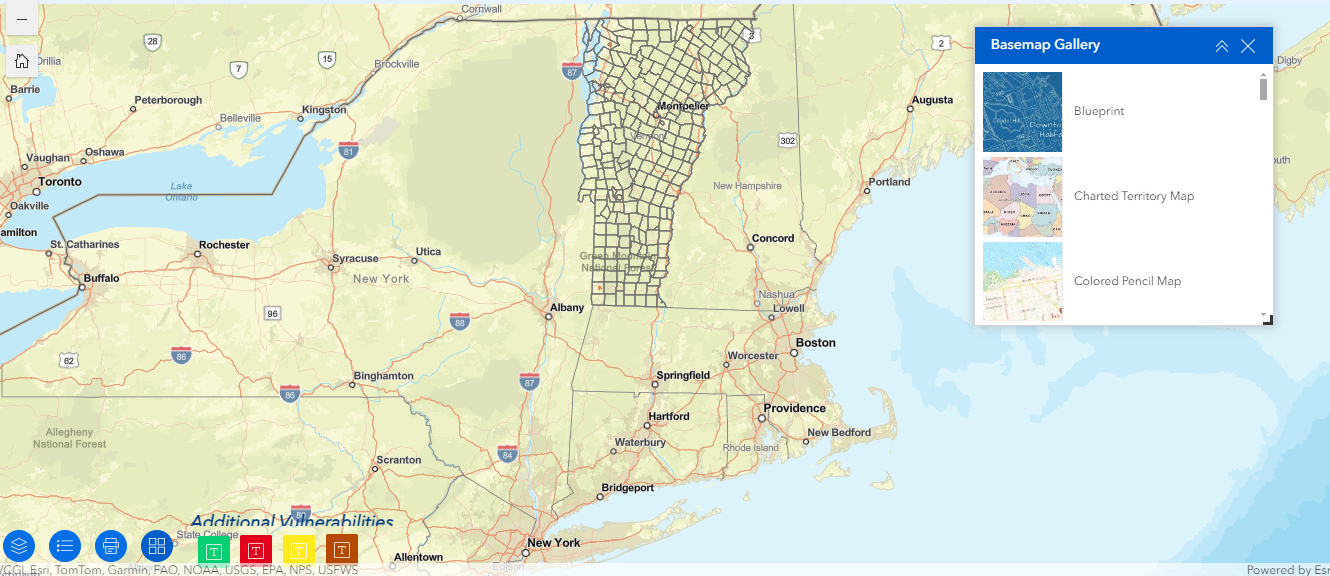
ERG Helps Vermont Assess Climate Vulnerability
ERG Helps Vermont Assess Climate Vulnerability
June 25, 2024
ERG collaborated with representatives from Vermont’s Climate Action Office and Agency for Digital Services, as well as Vermont Climate Council task group members, to develop the Municipal Vulnerability Indicators Tool (MVI). This interactive geospatial tool was designed for state, regional, and municipal agencies and organizations to identify community vulnerability to climate change based on social, economic, ecological, land use, built environment, and hazard factors. In developing the tool, ERG engaged with municipalities, regional planning commissions, and organizations working with Vermont’s vulnerable populations to ensure the tool reflects their experiences, expertise, and concerns. ERG leveraged the engagement findings to help inform the selection of 48 climate vulnerability factors and 13 climate hazards to include in the tool, and then gathered publicly available data for each. The tool will help users understand where climate vulnerabilities occur and the factors contributing to those vulnerabilities to inform the planning and actions needed to increase climate resilience in Vermont’s communities.
For additional information on the tool, including underlying project reports, a tool user guide, and a presentation introducing the tool, please see Vermont’s MVI webpage.
Client
Vermont's Climate Action Office and Agency for Digital Services
 February 1, 2024
ERG Supports Comprehensive Update of Massachusetts ResilientMass Plan
ERG Supports Comprehensive Update of Massachusetts ResilientMass Plan
February 1, 2024
When the Massachusetts State Hazard Mitigation and Climate Adaptation Plan was due for a 5-year update—as required by the Federal Emergency Management Agency (FEMA)—ERG supported the Massachusetts Emergency Management Agency (MEMA) in this undertaking, working in collaboration with the Massachusetts Executive Office of Energy and Environmental Affairs (EEA). Because much had changed since 2019, ERG’s support for the Commonwealth included updating all information in the plan and expanding information for many key topic areas, such as human health, critical infrastructure, and natural resources. ERG also integrated new data and information for identifying the highest-priority climate change impacts in Massachusetts; added data and mapping for environmental justice and other priority populations; integrated new census data; and responded to new FEMA guidance for state hazard mitigation plans. ERG collaborated extensively with MEMA and EEA throughout the process, held a series of working sessions with state agencies, and held drop-in office hours between meetings so that representatives of state agencies could stop by to get questions answered throughout the process. ERG also led engagement with community groups and interested parties in a community meeting series to obtain input on draft state agency actions and through focus groups. The final plan and executive summary were used to launch the ResilientMass Plan, Massachusetts’ climate and hazard program, which focuses on a sustainable “whole-of-community” approach to climate resilience and hazard risk reduction.
Client
Massachusetts Emergency Management Agency
 August 1, 2023
Moving the Needle Forward: Opportunities for Growth in Oregon’s Blue Economy
Moving the Needle Forward: Opportunities for Growth in Oregon’s Blue Economy
August 1, 2023
ERG’s Blue Earth Team conducted market analyses for the State of Oregon’s ocean resources and blue economy sectors. This research will inform a coordinated vision, priorities, and actions that can help to shape Oregon’s blue economy and increase overall investments on the Oregon coast.
Our report was presented to the Oregon Legislature in March 2023.
Client
Business Oregon
 May 3, 2022
NEWS: Blue Earth Team Helps Gather and Share Best Practices and Transferrable Strategies for Coastal Resilience Practitioners
NEWS: Blue Earth Team Helps Gather and Share Best Practices and Transferrable Strategies for Coastal Resilience Practitioners
May 3, 2022
Coastal resilience strategies are crucial for protecting and enhancing shorelines, communities, and ecosystems—and adapting to a changing climate. ERG recently supported the National Fish and Wildlife Foundation’s (NFWF’s) yearlong effort to gather and share best practices from coastal resilience practitioners, with the goal of enhancing coastal resilience efforts across the United States. ERG reviewed more than 100 grantee reports and peer-reviewed articles and conducted interviews with 60 resilience practitioners. ERG used the findings from this research to develop Coastal Resilience Success Stories, a series of case studies documenting exemplary coastal resilience projects throughout the country. The case studies describe key challenges and highlight transferable strategies for resilience practitioners, providing an important foundation for future resilience efforts. Featured strategies range from conducting ongoing monitoring of the project site to leveraging resources to build local capacity to testing novel approaches. NFWF and ERG’s work will help enhance the technical capacity of resilience practitioners and decision-makers, in addition to strengthening the overall human and ecosystem impacts of coastal resilience projects.
Client
National Fish and Wildlife Foundation
About Us
We specialize in developing sustainable and resilient solutions to complex social and environmental issues that our clients confront in urban communities and natural systems.